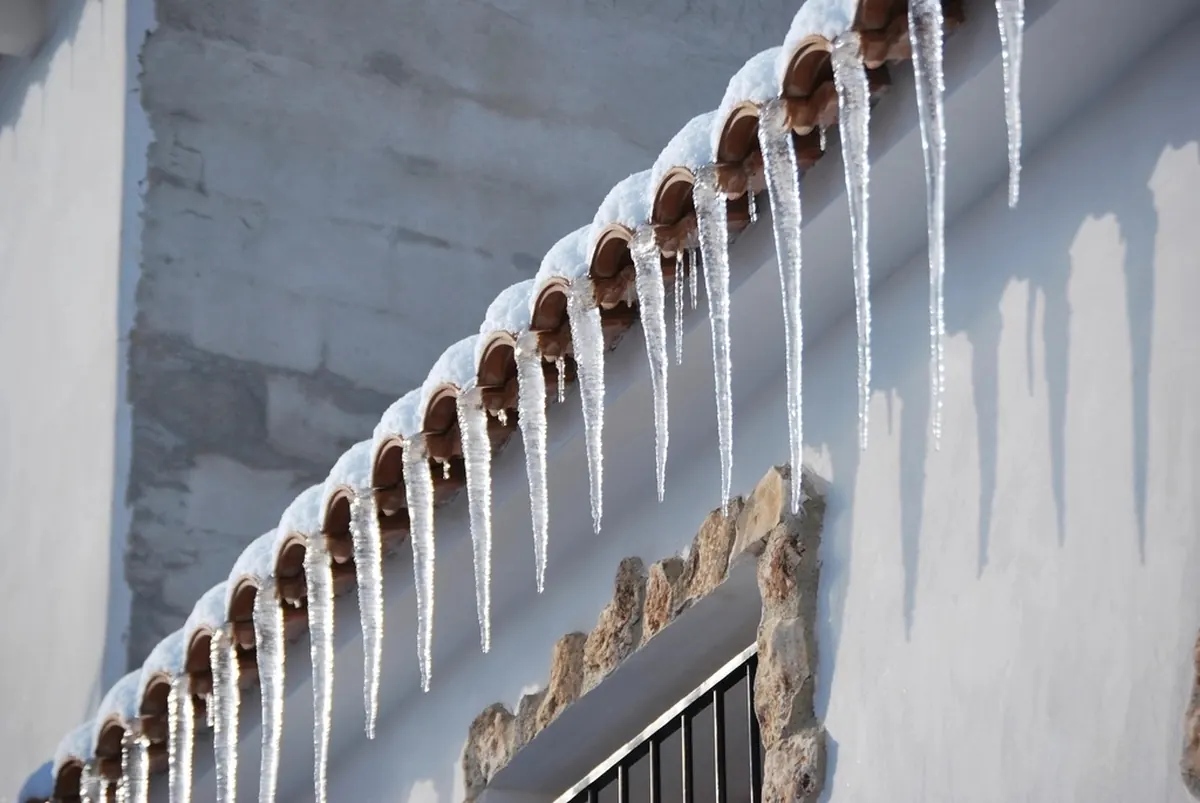
How ice dams and snow load damage Maine homes
An ice dam forms when heat escaping through the roof melts snow, the meltwater runs down to the cold eave, and it refreezes into a ridge of ice. Water then backs up under the shingles and into the house. Capes with knee walls and finished half-stories, older homes with little attic insulation, and additions with low-slope roofs are especially prone. Snow load is the related problem: heavy, wet snow and rain-on-snow events can overload roofs, crack rafters and collapse porch roofs, barns and carports. An ice dam insurance claim in Maine often involves both. Our guide on ice dam claims and Maine estimates goes deeper.
What carrier ice dam estimates commonly miss
A Maine claim that looks small in March can look very different once the snow is off the roof. Common gaps include:
- Hidden water. Wet insulation in knee walls, soffits and exterior wall cavities, often far from the visible stain.
- Plaster and finishes. Older plaster ceilings priced as drywall patches, and paint scoped for a single wall rather than the whole room.
- Roof damage. Shingles, underlayment and sheathing at the eaves damaged by ice and backed-up water.
- Gutters and trim. Gutters torn off by ice, bent drip edge and fascia rot.
- Snow-load structure. Cracked rafters, sagging ridges and failed porch or barn framing that needs engineering review.
- Winter conditions. Snow removal before repairs, temporary protection, cold-weather labor rates and longer drying times.
- Mold. Growth in attics and walls after slow leaks, where the policy allows.
Coverage basics for ice dams and snow load
Most Maine homeowners policies cover sudden water damage from an ice dam and collapse or damage from the weight of ice and snow. Some exclude the cost of removing the ice dam itself, wear and tear, or long-term seepage. Policies may also set conditions on vacant or unoccupied properties. When the carrier accepts the loss but pays too little, that is an appraisal issue. When the carrier denies the claim or says the damage developed over time, that is a coverage dispute, and a Maine attorney is the right resource.
Sugarloaf, Sunday River and high-snow country
Ski-area condos and mountain homes in Franklin and Oxford counties face heavy snow loads, which is why standing-seam metal roofs and snow guards are common there. Damage to those systems, and to the decks and entries below them, is often underpriced. Condo associations with these issues may want our condo association appraisal page.
Report as soon as you see water, even if the damage looks minor, and photograph the ice dam from the ground before it melts. Many policies require prompt notice and set a suit-limitation period; many give one to two years, so read yours. The claim date tracker helps you track every deadline.
Documentation that strengthens an ice dam claim
Photograph the icicles and ice ridge at the eaves, interior stains with dates, and any bulging or cracked plaster. Ask a contractor for moisture readings in walls adjacent to the visible damage and in the attic. Keep invoices for roof raking, steaming or snow removal. After the snow melts, photograph the roof edge, gutters and sheathing. If you own a seasonal home, keep records showing heat was maintained, and check the seasonal camp vacancy check.
How appraisal applies to ice dam claims
Ice dam disputes are usually about scope: the carrier pays for the stain it saw, and the homeowner later finds wet insulation, soft sheathing and plaster cracks across several rooms. We inspect in the winter if needed and return after the thaw, open walls with your permission, and write a scope that follows the water. We price Maine winter conditions and materials, including matching shingles and repairing plaster where it exists.
Illustrative example
Illustrative example: an ice dam on a 1950s cape in Lewiston leaks into two upstairs bedrooms. The carrier pays $5,600 to patch ceilings and paint. After the thaw, the owner’s contractor finds wet insulation in the knee walls, rotted sheathing along 30 feet of eave and damaged gutters, and the estimate totals $21,700 with snow removal and winter protection. That gap is a scope dispute appraisal can resolve. Figures are invented for illustration.
Questions about ice dam & snow load appraisal
Is an ice dam insurance claim in Maine usually covered?
Most homeowners policies cover sudden water damage from ice dams. Some exclude the cost of removing the ice itself or long-term seepage, so read your policy.
Should I wait until spring to file?
No. Report water damage promptly, then supplement the claim when more damage is found after the thaw. Many policies require prompt notice.
Does snow load collapse count as covered damage?
Many policies cover damage from the weight of ice and snow, including partial collapse. Coverage for outbuildings and porches may vary, so check your policy.
Can appraisal include damage found after the first payment?
Often yes. If the carrier has accepted the ice dam loss, later-found damage can be included in the amount of loss set by appraisal.