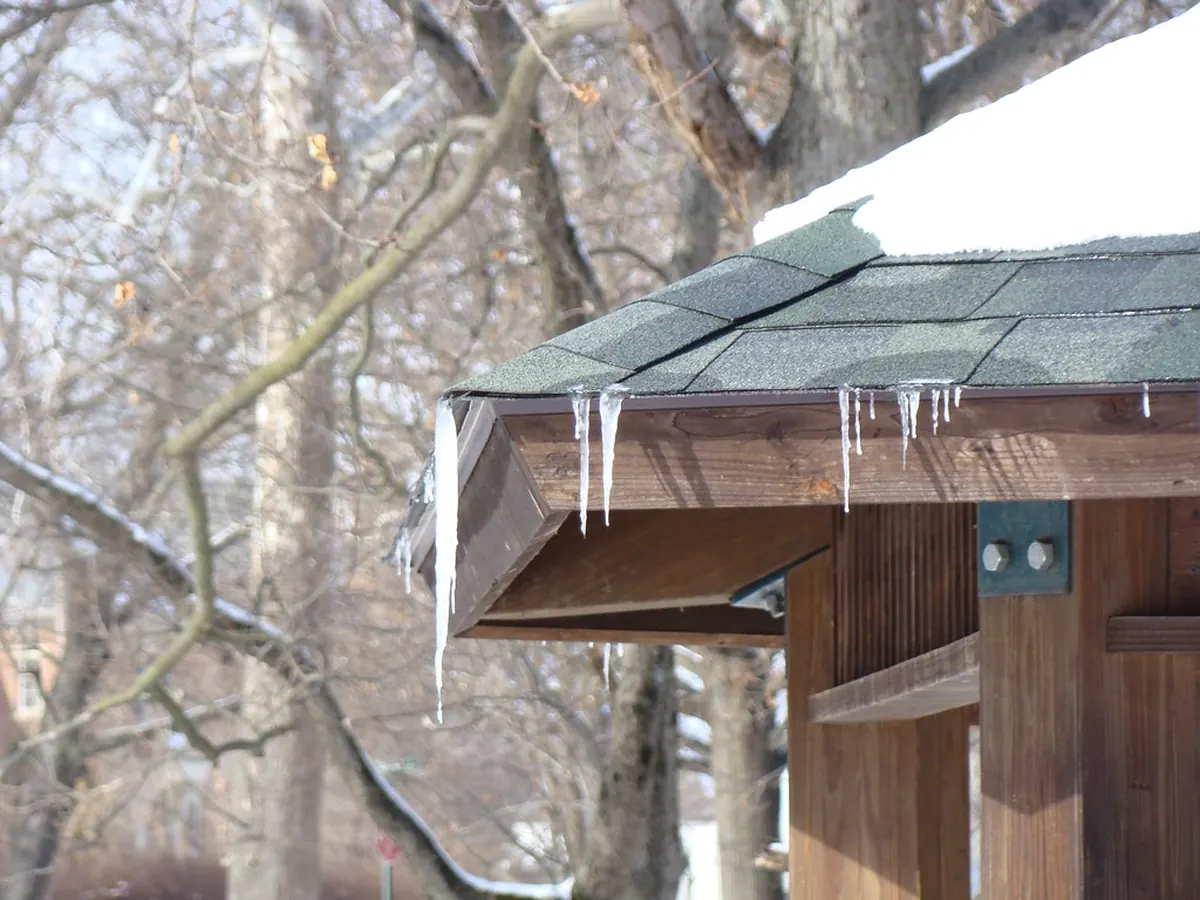
Why ice dam claims in Maine get underestimated
Ice dam claims in Maine have a timing problem built into them. Ice dams don’t announce themselves. The water shows up in a closet ceiling in February, weeks after the dam formed, and by the time an adjuster visits, the roof is under snow and the wet insulation is hidden behind drywall. The first estimate is written from what can be seen that day, which is rarely everything.
That gap between visible and actual damage is the single biggest reason ice dam claims come back short. A stained ceiling patch and a few feet of repainting may be all that makes it into the first estimate, while soaked cellulose, swollen subfloor and mold-prone framing stay out of view.
Where the water actually goes
Meltwater backed up behind an ice dam travels under shingles and follows gravity and framing. In a typical Maine cape, that often means it runs into the knee walls and down into the first-floor exterior walls. In connected farmhouses, it can travel along the joint between the main house and the ell.
Commonly missed areas
- Insulation in the attic eaves and knee-wall spaces, which loses value once wet
- Exterior wall cavities below the eave, where water sits behind plaster or drywall
- Window and door trim that swells or stains weeks later
- Hardwood flooring that cups slowly after water seeps from the walls
- Electrical boxes and fixtures in wet ceilings that need inspection
Roof items carriers dispute
Many policies exclude the ice dam itself and wear or maintenance issues, but a roof section torn open to reach interior damage, or shingles damaged by the dam, may still belong in the scope. Ice and water shield is a frequent sticking point. Where code requires it at the eaves on any reroofing, leaving it out of the estimate understates the true repair.
Building a file that shows the full loss
The strongest ice dam claims are documented in layers, starting the day the leak appears and continuing through the thaw. Here is what helps most:
- Photograph the ceiling stains, the ice along the eaves and any icicles inside soffits, with dates.
- Record moisture readings from a mitigation company, not just a visual inspection.
- Keep invoices for roof raking, steaming and emergency tarping, since mitigation is usually part of the claim.
- Ask for a follow-up inspection once the roof is clear of snow.
- Get a contractor estimate that lists each room and surface, not a single lump sum.
A Maine claim that looks small in March can look very different once the snow is off the roof. If the carrier inspected in midwinter, put a written request for a spring reinspection in the file before you accept any final figure.
Reading the carrier’s estimate line by line
When the estimate arrives, compare it room by room against what you know is wet. Look at each line item’s quantity and unit. Drywall should be measured by square foot for the full affected area, not just the stained patch. Painting usually needs to cover the whole wall or ceiling plane to look right.
Check whether the estimate includes overhead and profit when several trades are involved, such as drywall, insulation, painting and flooring together. Check whether depreciation on paint and drywall seems reasonable for the age of the surfaces. Our carrier estimate line review covers this in detail.
Illustrative example: suppose a carrier estimate for a two-story colonial in Bangor covers one bedroom ceiling at $1,900. After the thaw, moisture readings show the wall below and the closet are also wet, and a contractor scope including insulation, drywall, trim, paint and a section of hardwood comes to $9,400. The numbers are hypothetical, but the pattern of a modest first estimate growing several times over is common with ice dam losses.
When ice dam claims in Maine go to appraisal
If the carrier has accepted the loss but will not move on the scope or pricing, appraisal is often the right next step. The panel can look at the moisture data, the photos and both estimates and decide what the repair really costs. It cannot decide whether the policy covers the ice dam itself, which remains a coverage question for the carrier and, if needed, a Maine attorney.
Before you demand appraisal, read our guide to ice dam and snow load appraisal, and track every policy date in the claim date tracker. Ice dam claims in Maine reward patience and good records more than almost any other winter loss.